
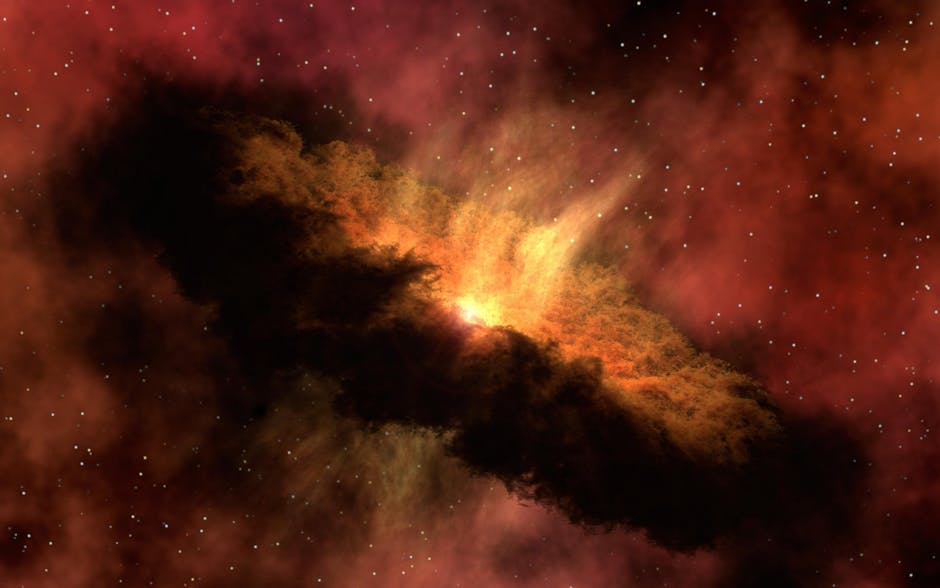
A star vanished in a 7-hour cosmic fury, revealing unseen black hole power…
Scientists detected GRB 230307A, an unprecedented 7-hour explosion from deep space on March 7, 2023. This gamma-ray burst is the longest ever recorded, baffling astronomers globally. Here's what they found about this unique cosmic anomaly.
This colossal event, originating 1 billion light-years away, resulted from a rare intermediate-mass black hole devouring a star. Known as a "tidal disruption event" (TDE), it challenges typical long GRB origins. Talk about a monstrous cosmic appetite!
Observations by NASA's Fermi, Swift, and IXPE missions, alongside James Webb and Hubble, confirmed this phenomenon. Dr. Eleonora Troja from NASA Goddard highlighted its distinct signature. This hidden truth reshapes our understanding of black holes.
Unlike usual long GRBs from collapsing massive stars, GRB 230307A points to elusive intermediate-mass black holes. The real reason behind this record-setting blast offers new insights into the universe's most violent events.
This "intriguing puzzle" pushes cosmic exploration forward. What new black hole secrets will future observations unveil? Share your thoughts below!

